















Single flow ventilation
The principle of single flow ventilation is to ventilate the accommodation by sweeping with:
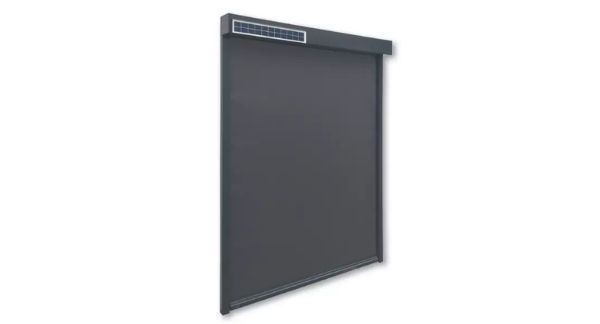
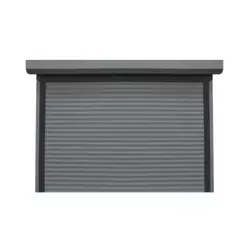
- Fresh air inlets from outside into living areas (living room, bedrooms, office, games room, etc.). These air inlets are generally installed on the exterior joinery, but they can also be located at the level of the roller shutter boxes or in the wall facing outside.
- Air extraction vents in utility rooms or wet rooms (kitchen, bathroom, toilet, laundry room, etc.).
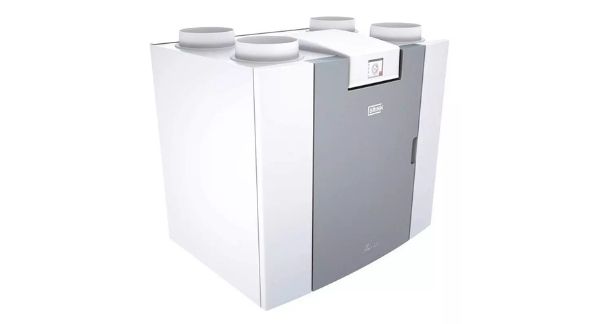
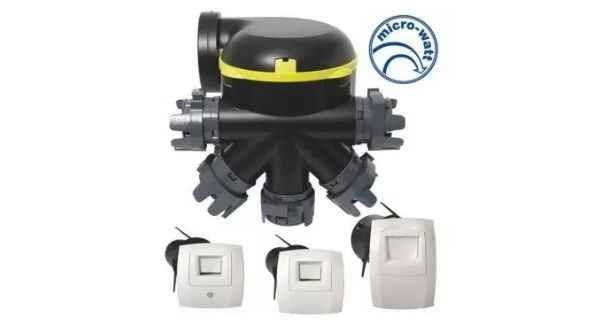
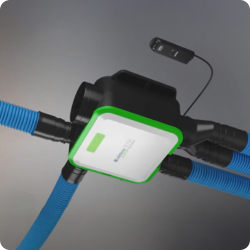
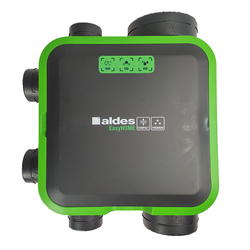
These extraction vents are connected to the ventilation box equipped with a fan that must be able to operate continuously. The extraction vents are usually self-regulating to extract a fixed air flow depending on the room or hygroregulated with operating conditions defined by a technical notice published by the CSTB.
Single-flow ventilation has a major advantage over dual-flow ventilation: its investment cost.
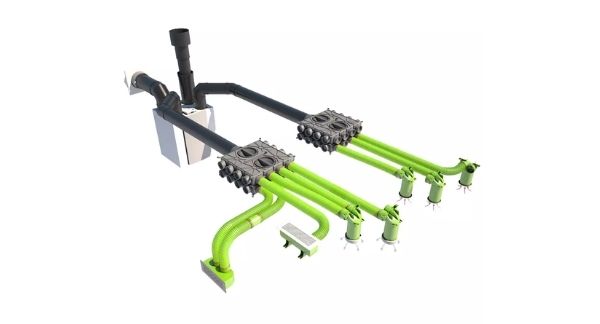
There is less technology in a single-flow box: a fan that consumes more or less electricity and a plastic shell. The ducts are traditionally in a flexible network because the ventilation is placed in the attic. It is only the rejection of outside air without any danger of degradation of the incoming fresh air.
However, single-flow ventilation, which protects the building and renews the air in the home, brings cold air into the living areas and expels hot air outside. To reduce energy loss, air renewal rates are reduced. For homes that are increasingly airtight and where the habit of opening windows is lost, the quality of the indoor air can deteriorate very quickly.
Generally speaking, whatever the choice of means of ventilation for the building, the user must be made aware of this means of ventilation in order to adapt and maintain acceptable indoor air quality.
Choosing the right single-flow ventilation
To live in quality air thanks to your VMC, our team is at your side.
Within 24 hours maximum, we will get back to you to establish a free preliminary study
Single flow self-regulating or hygro-regulating ventilation?
A self-regulating single-flow ventilation system allows you to ventilate your rooms with a fixed flow rate at both the extraction vents and the air inlets. The only variation in flow rate is in the kitchen with the possibility of having a boost mode. Energy losses are relatively high, but the indoor air renewal is theoretically correct.
Single-flow hygroregulated ventilation is gradually replacing the self-regulated model. The extraction and insufflation vents open or close depending on the humidity in the room. This system makes it possible to significantly reduce the air renewal flow rate when the humidity level is low and therefore saves energy. The humidity of the home is supposed to represent the occupancy rate; the more people and human activity there are, the more humidity there is. In addition, it is the humidity level that is too high that is most quickly visible in terms of deterioration of the building. However, in reality, there are other pollutants (volatile organic compounds - VOCs) that are present even if there is little humidity and the operation of the hygroregulated vents is not necessarily responsive. The air renewal rate of the ventilation system is then not always sufficient in a house that has been made very airtight. There are 2 types of hygroregulated ventilation:
- Single flow hygro A ventilation: the air inlets are fixed and self-regulating, the vents are hygroregulated.
- Single flow hygro B ventilation: the air inlets and extraction vents are hygroregulated.
In new buildings, single flow hygro B ventilation will most often be prescribed to reach the RT2012 level. In this case, you will have to open the windows much more, especially if your indoor activities and equipment are polluting. Find out mores !
Single flow ventilation hygro A or hygro B?
The hygro A or hygro B single flow ventilation systems are both hygroregulated single flow ventilation systems.
Single flow hygro A ventilation consists of self-regulating air inlets with a fixed flow rate in living areas (living room, bedroom, office, etc.) and this system is to be preferred in both new and renovated buildings. Indeed, with this system you ensure a sufficient supply of fresh air in all circumstances, which is not necessarily the case for hygro B ventilation.
Single flow hygro B ventilation is the ventilation system that most limits the entry of fresh air into the house and promotes energy savings. It is often prescribed in the RT2012 thermal study because it gives the best results and favors less insulation.
This advantage has a downside in terms of indoor air quality. Indeed, if humidity is the most visible indoor "pollutant" (condensation, mold stains, etc.), it is not the only one. It is probably better for a living room such as a bedroom or living room to be sufficiently open to the entry of fresh air.
What precautions should be taken when installing a single-flow CMV?
The installation of a single-flow CMV must comply with certain rules to ensure normal long-term operation:
- Respect the positioning of the vents and air inlets set by the regulations,
- Use insulated ducts in cold spaces to prevent condensation,
- Use rigid or semi-rigid ducts (flexible network prohibited) in technical spaces (false ceilings, partitions, technical ducts),
- Pay attention to very good sealing of the networks,
- Finally, the most important thing is to carry out a commissioning to check that the installation is working properly (operation of the kitchen boost, extraction and not insufflation on all the vents, compliance with the air flow in each room via a pressure gauge).
Additional options for ventilation in your home
- Double Flow CMV : increase the energy efficiency of your home.
- Double Flow VMC Filter : for a consistently efficient ventilation system.
- VMC network and duct : conduits and accessories for optimal ventilation.
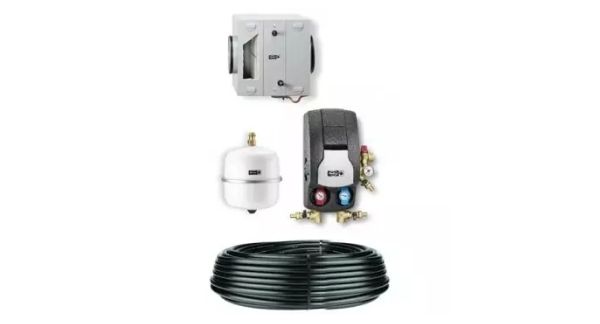
- Canadian hydraulic or air well : use geothermal energy to improve thermal comfort.
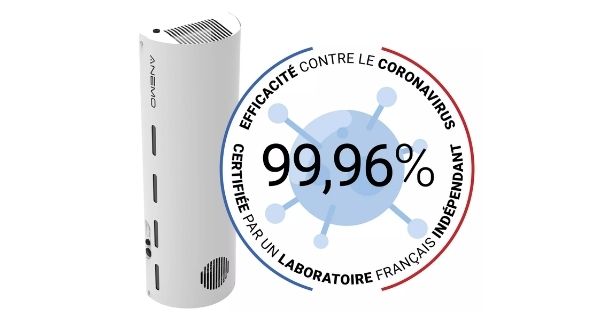
- UVc Air Purifier : Improve the indoor air quality of your home.