











Their installation or delivery? Guillaume is here to advise you!



- Back to top
- Description
- Documentation
- Options details
- Features
- Article en lien avec les pergolas
- Customer reviews
- Video gallery
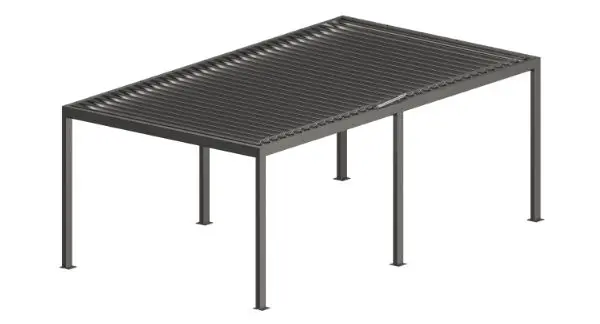
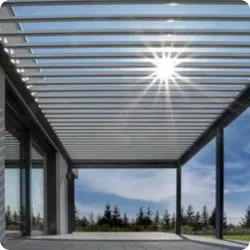
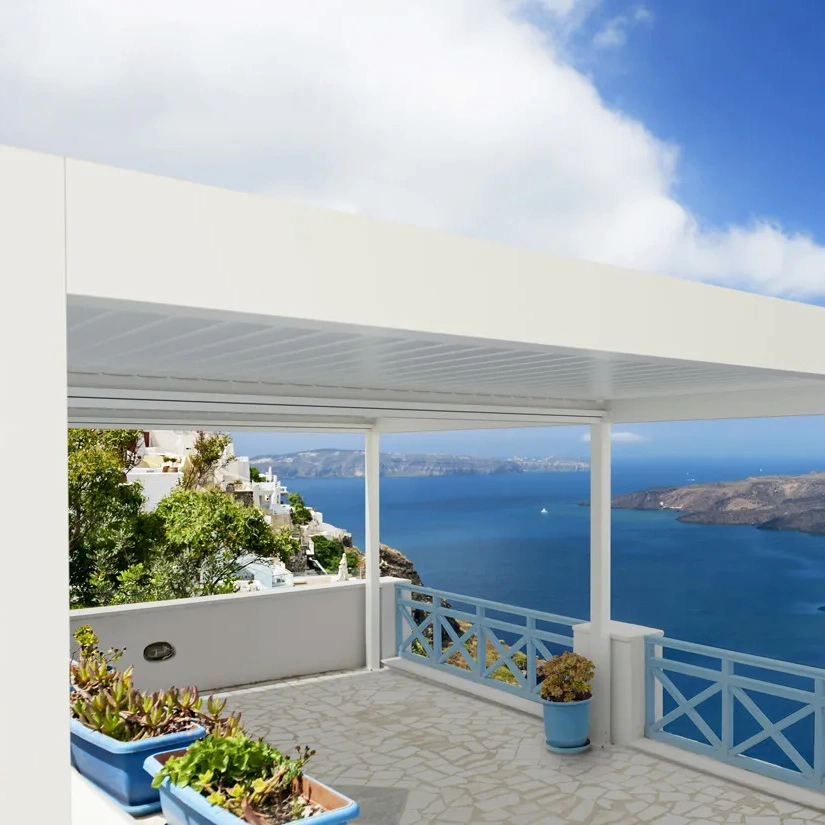
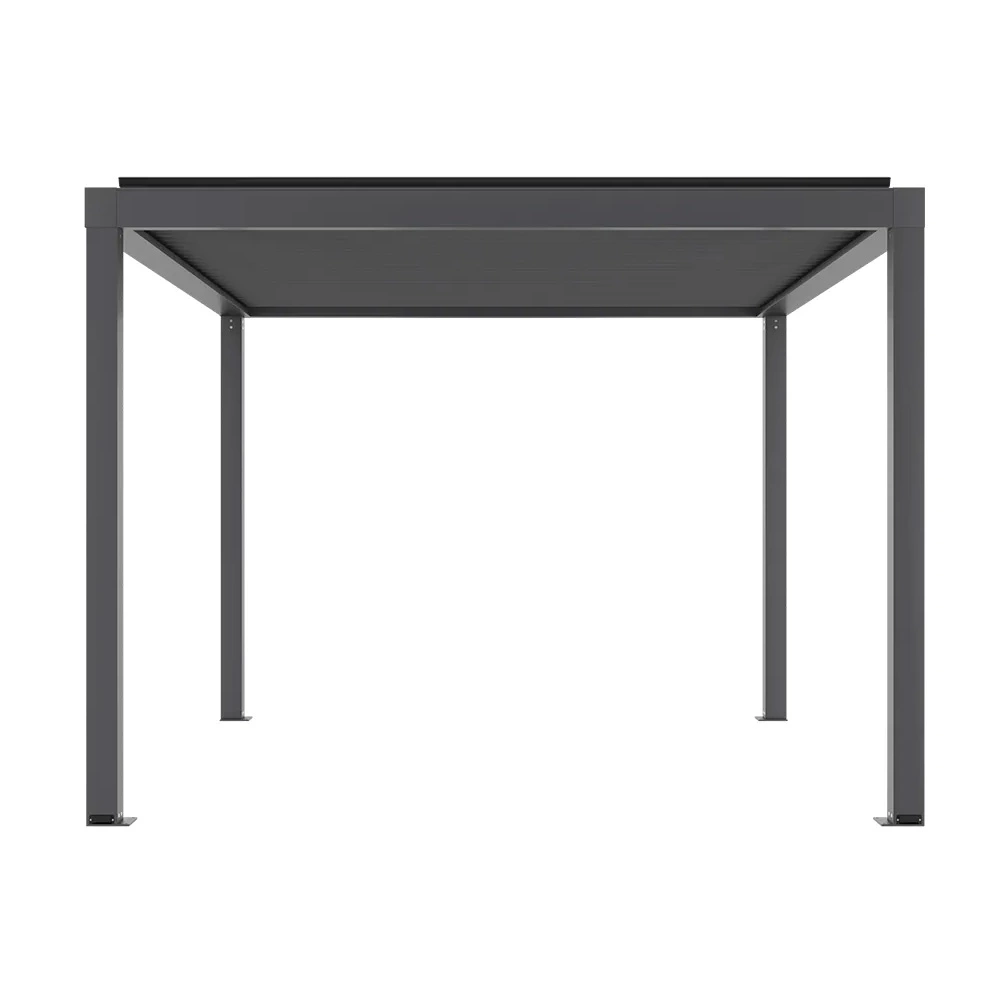
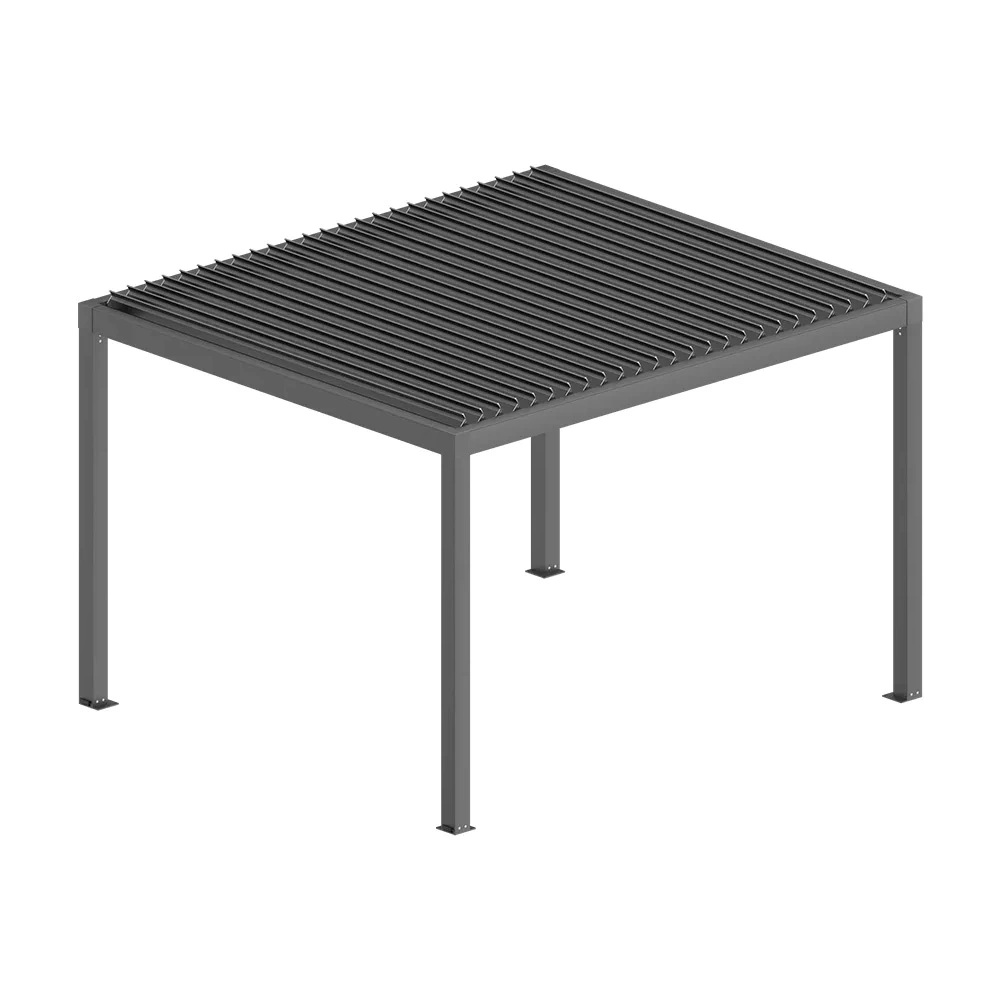
Self-supporting bioclimatic pergola on 4 posts to protect your terrace
The self-supporting model is mounted on at least 4 posts, unlike the wall-mounted model, which rests against a wall.
For larger dimensions, this can go up to 6 or 8 posts if you exceed 5.2 m.
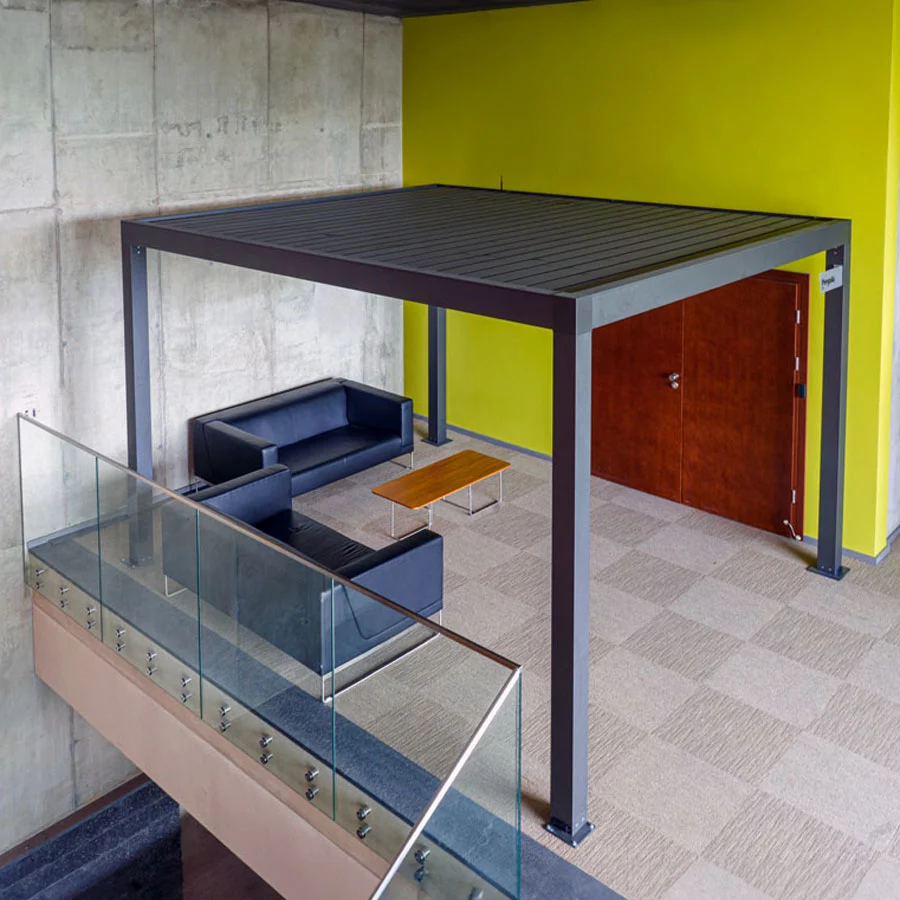
This custom-made, professional-quality pergola adapts easily to your desires and your exterior. We also talk about freestanding pergola.
It is therefore independent, which allows you to install it freely in the middle of your garden, on your terrace, at the end of the swimming pool, etc...
The quality of the slats gives it a robust appearance and ensures perfect sealing thanks to the lip seal which ensures the junction between the slats.
The system of gutters and water drainage in the posts will facilitate the evacuation of rainwater.
Your bioclimatic pergola is guaranteed
10 years
on structure
5 years
on the engine
2 years
on the LED option
Freely develop your exterior thanks to your future self-supporting pergola
- Extruded aluminum construction and stainless steel components
- Adjustable extruded slats (not just sheet metal) and motorized Somfy IO or RTS radio
- Water drainage system
- Maximum dimensions of a module: width 4 m, projection 7 m
- Minimum dimensions of a module: width 1.2 m, projection 1.2 m
Enhance your exterior with a contemporary design
- 85 x 150 mm post, 85 x 212 mm bar and 216 x 40 mm blade
- Be comfortable with a maximum height under the bar of 2.8m
- Adapts to all conditions: wind resistance class 6 (400 Pa ~41kg/m²)
- Enjoy warm evenings with optional LED lighting (neutral color 4500k)
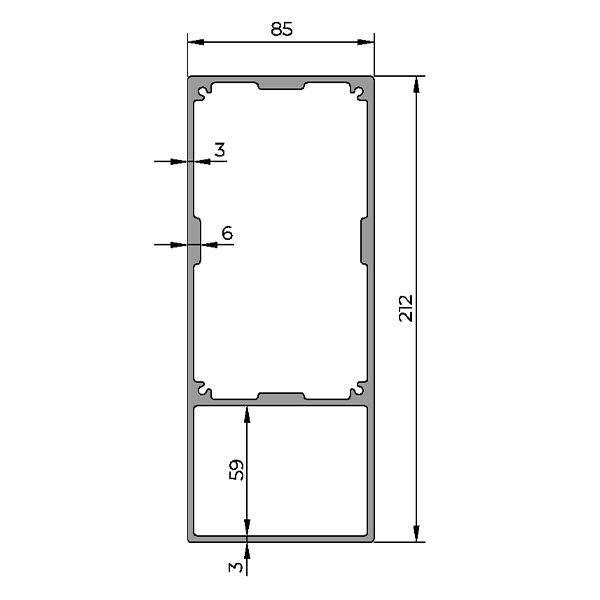
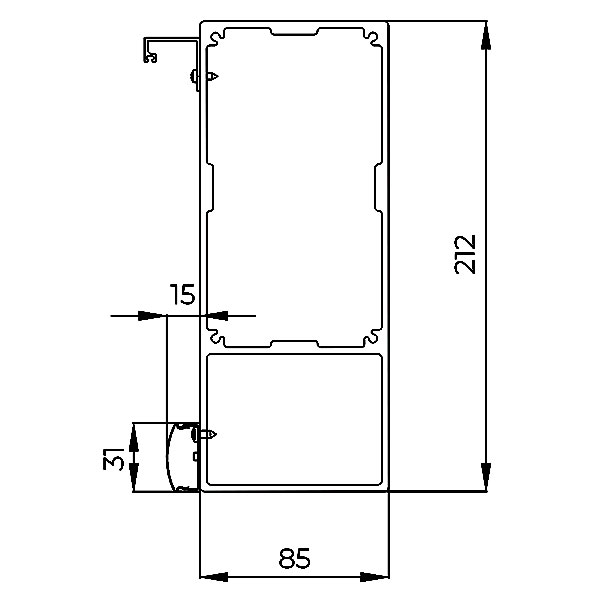
Bar section (85 x 212 mm)
Material: EN AW6060 T66
Static characteristics:
Mass = 6.48 kg/m
Area = 24.01 cm 2
J1 = 291.31 cm 4
J2 = 1216.58 cm 4
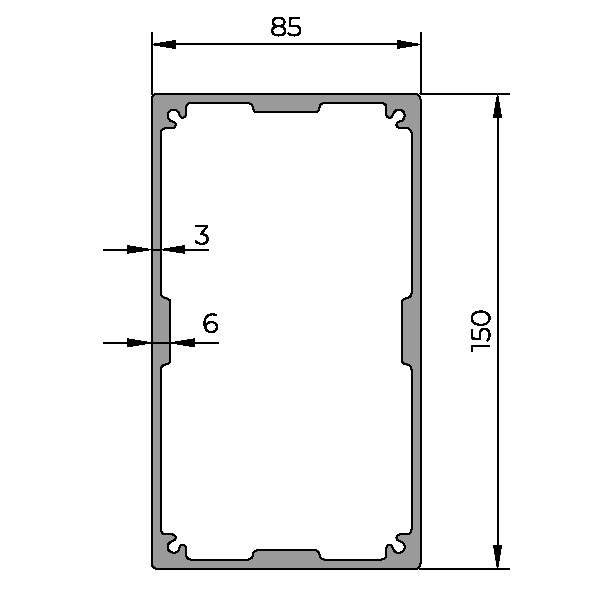
Post cut (85x150)
Material: EN AW6060 T66
Static characteristics:
Mass = 4.83 kg/m
Area = 17.89 cm 2
J1 = 215.9 cm 4
J2 = 564.44 cm 4
Build the perfect pergola to transform your garden
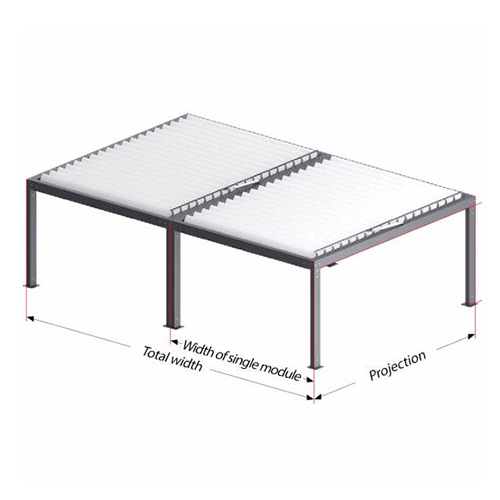
Different possible combinations,
do not hesitate to contact us for a free study
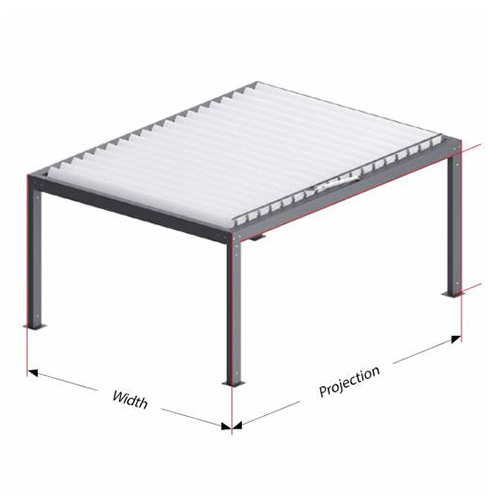
Classic ride-on version
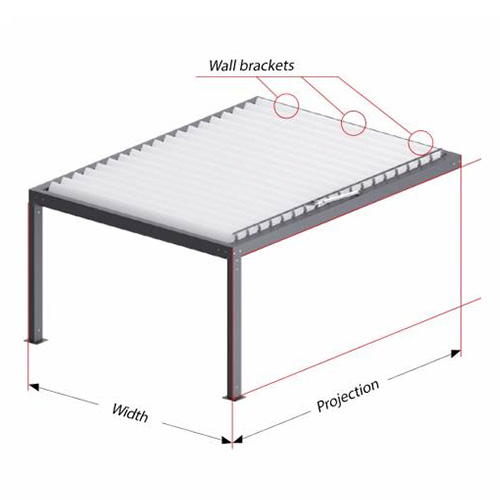
Discover the attached version
1. Overview of a freestanding pergola:
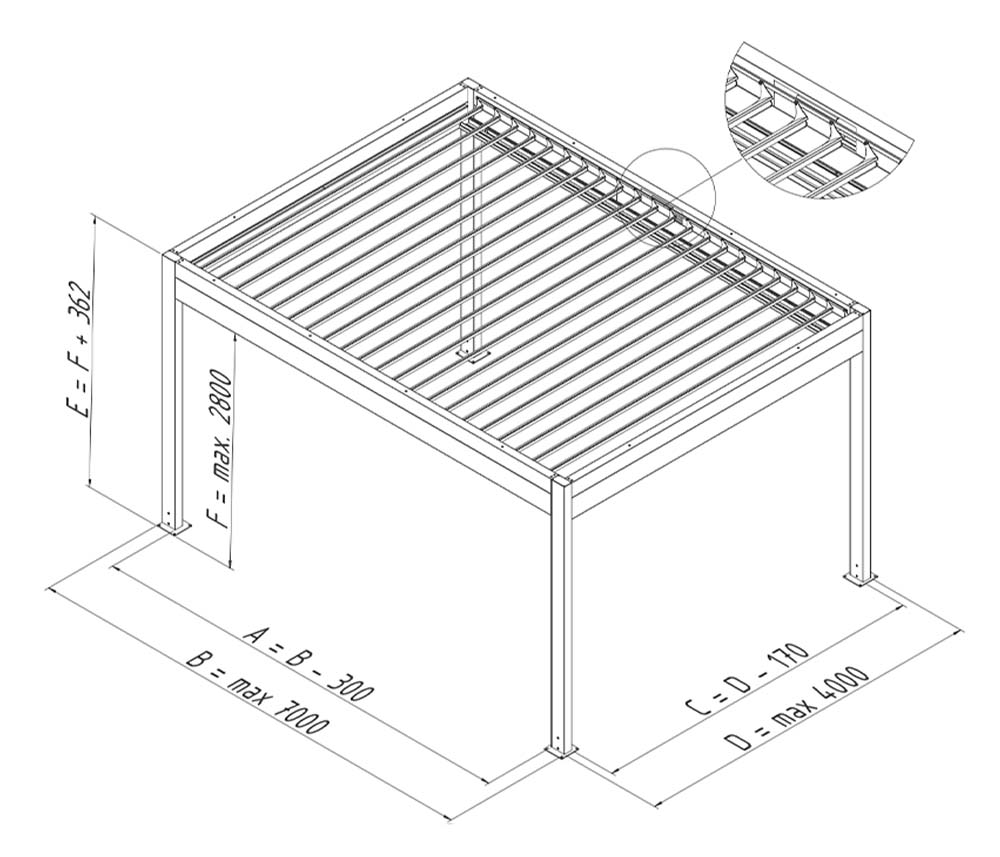
Note: the drawing shows the system of projection B = 4400 mm and width D = 3500 mm.
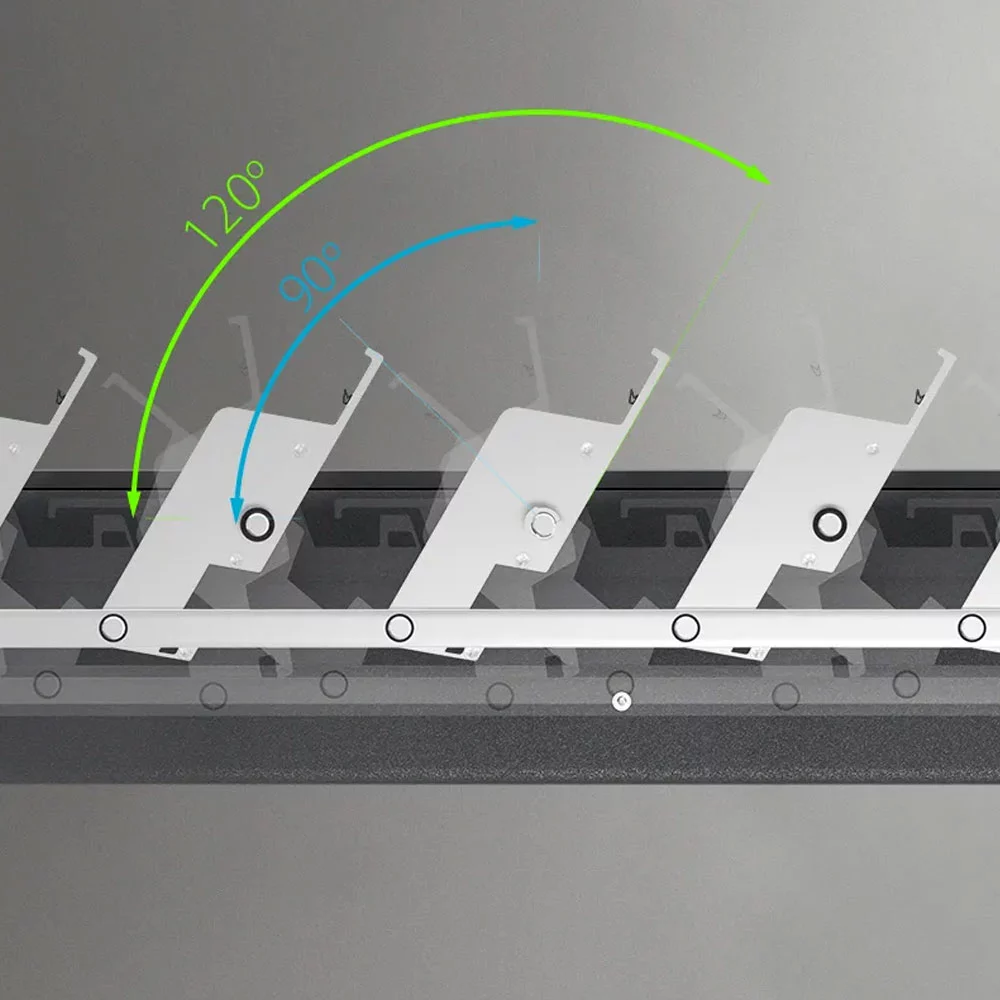
2. How does the rotation of the blades work?
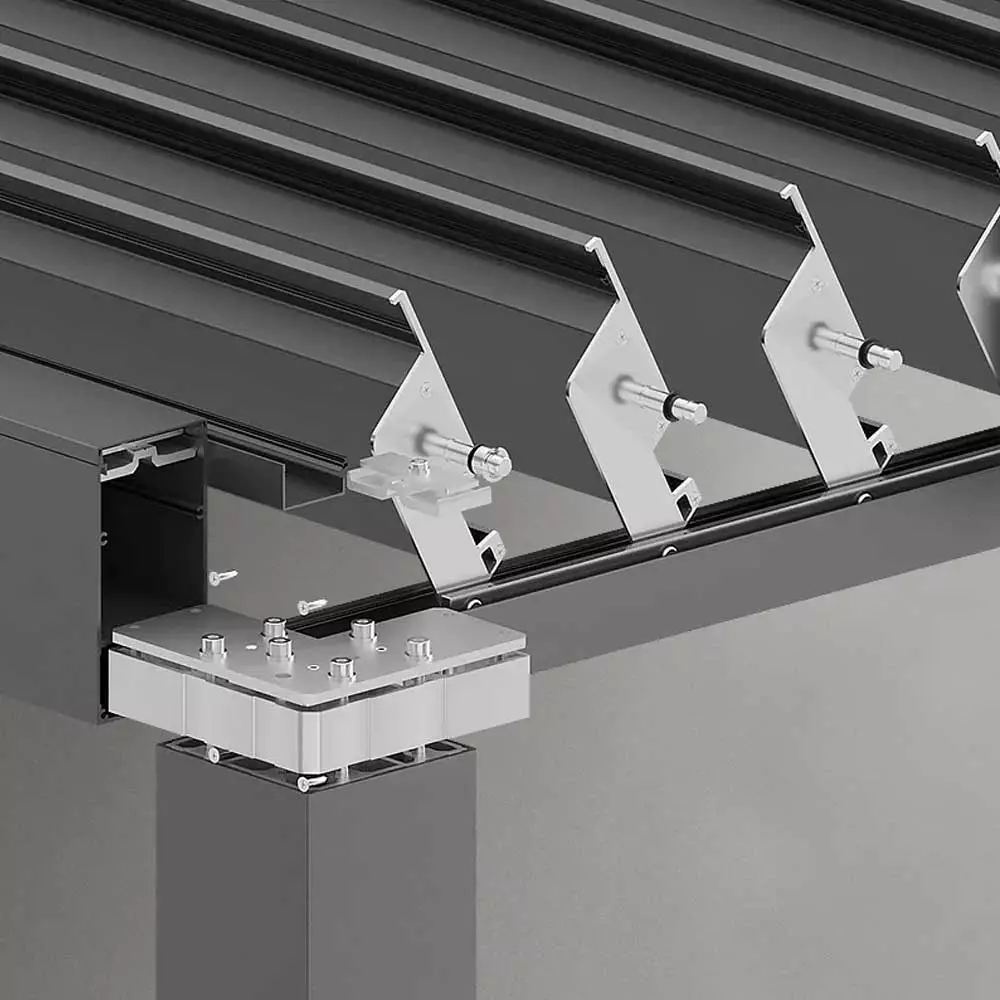
The rotation of the blades is due to the motor which drives the strand forwards or backwards.
This 8 x 20 mm strand which runs the entire length of the pergola is attached on the one hand to the motor using a guide support, and on the other hand to each of the slats at regular intervals using screws.
For more details, refer to the instructions.
a. Closed blades
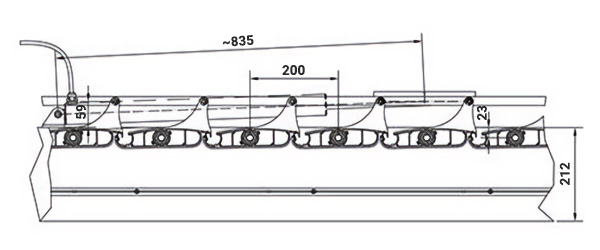
drive side
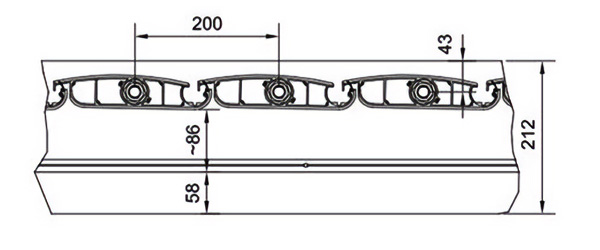
Landing side
b. Blades with the maximum height of the motor drive
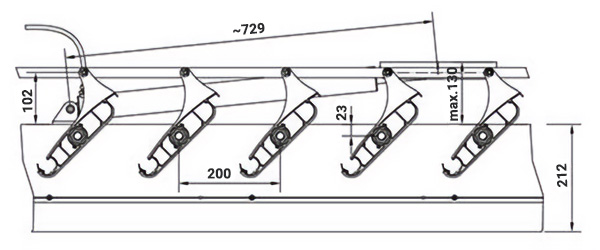
drive side
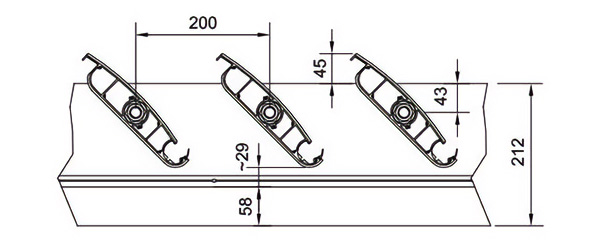
Landing side
c. Open blades
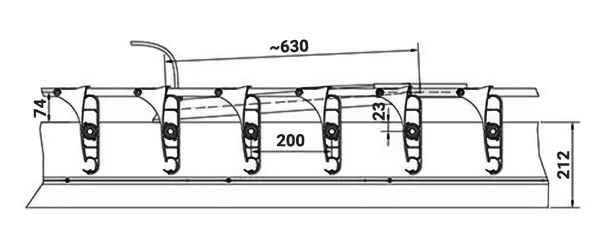
drive side
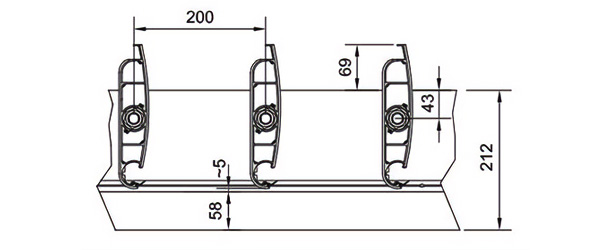
Landing side
d. Blade rotation mechanism
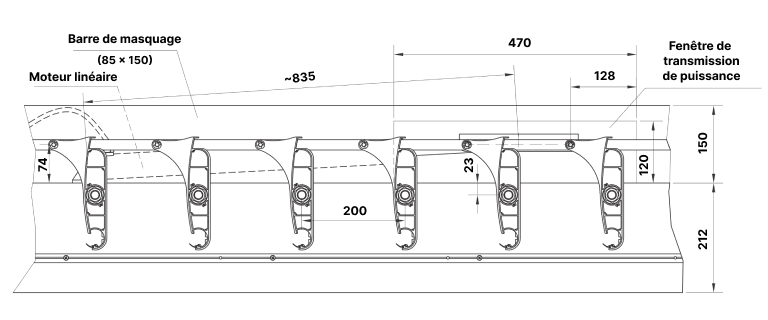
drive side
3. How to fix the motor?
Blade drive unit
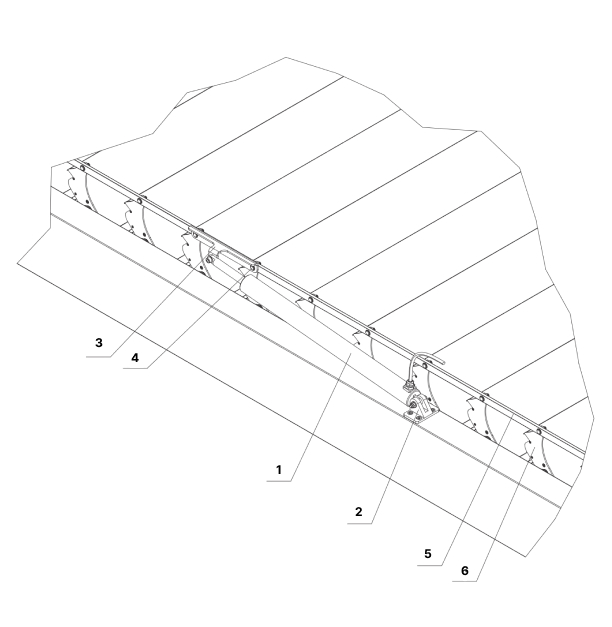
Meaning:
1 - Elero linear motor power 1200N
2 - Motor support
3 - Guide support
4 - M8 screw
5 - Strand 8 x 20 mm
6 - Blade tip (propeller)
Blade drive unit with masking bar
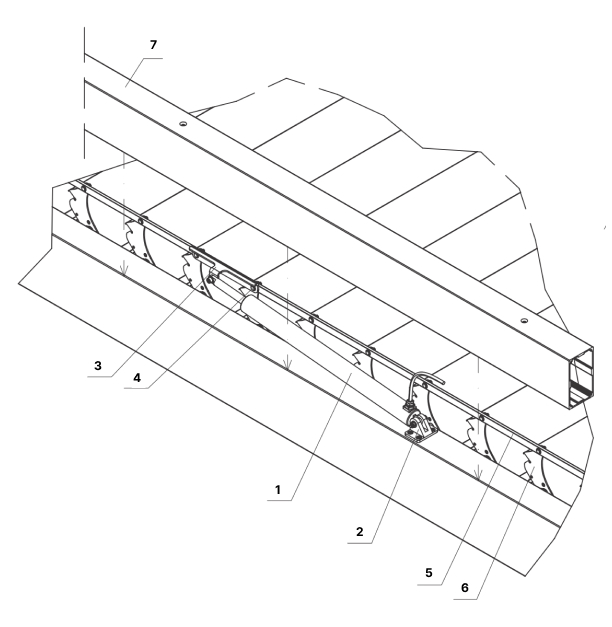
Meaning:
1 - Elero linear motor power 1200N
2 - Motor support
3 - Guide support
4 - Rod
5 - Strand 8 x 20 mm
6 - Blade tip (propeller)
7 - Masking bar

Motor support for simple pergola
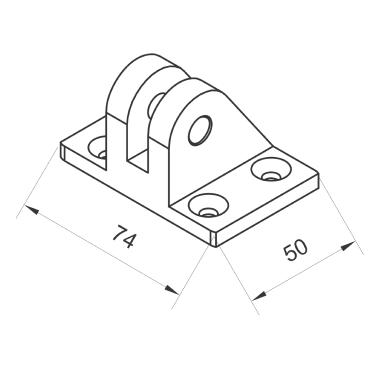
Motor support for pergola with motor cover
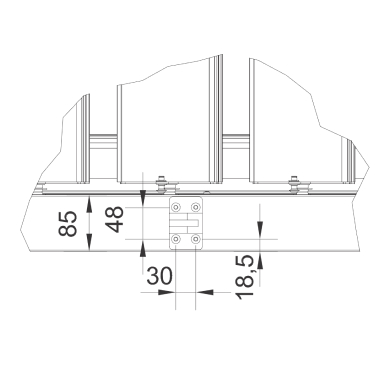
Motor attachment for simple pergola
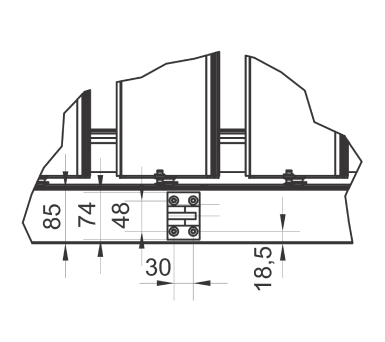
Motor attachment for pergola with motor cover
4. How does the gutter work?
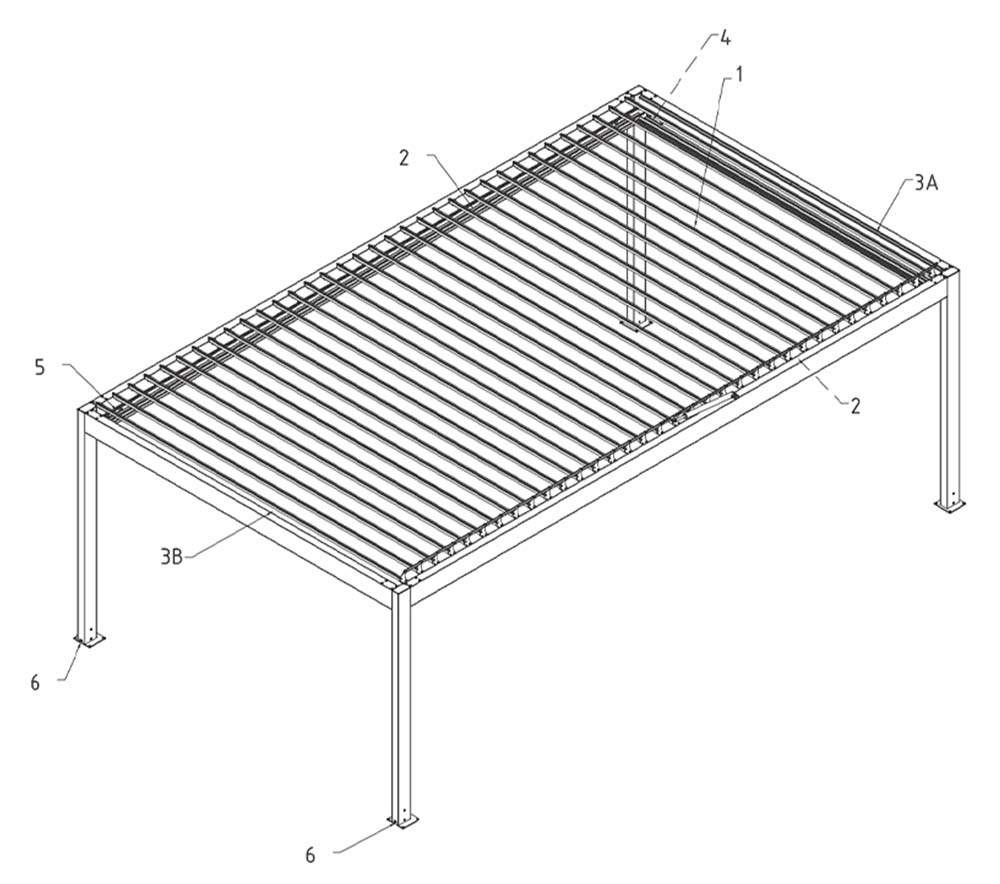
Designation of water drainage details:
1. Flow through the blade gutter
2. Flow from the blades to the common gutter
3A. Rear peening blade
3B. Front peening slat
4. Additional side gutters (in case of water diversion to the side or in the wall version)
5. Overflows between the gutters (longitudinal and transverse)
6. Common gutter diversion to the bars and column profile
7. Column derivation
Two posts with water diversion are required.
Detail 1
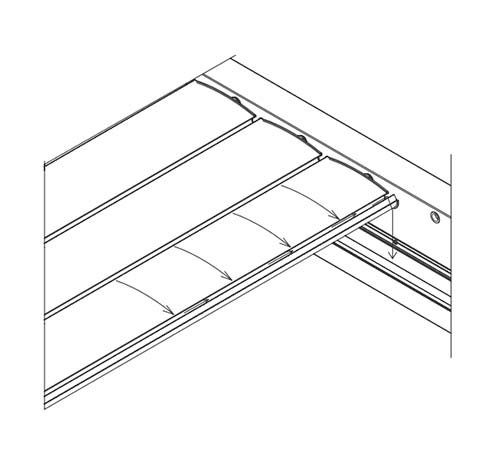
Drainage with blade gutter
(stable longitudinal slope of 20 mm)
Gutter diameter 36 mm
Detail 2
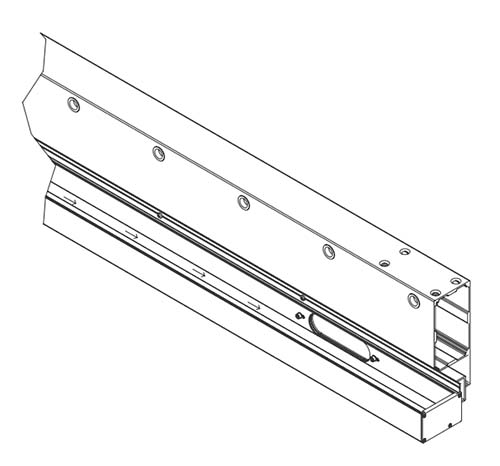
Drainage with the common gutter
(transverse slope, without longitudinal slope)
Internal section 87 x 48 mm
Detail 3a
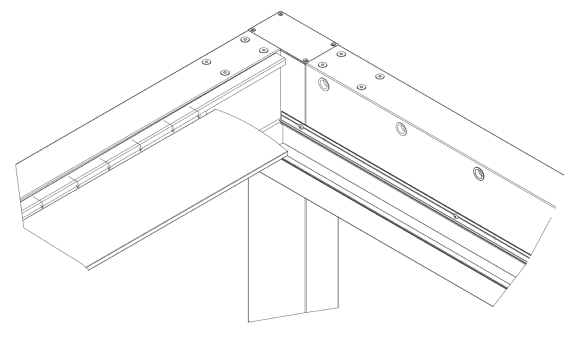
Flow from back blade to back peening blade (bent gutter).
The gutter without slope. The drain ends from the gutter to the common gutter.
NOTE: The linked splint of two segments with the stud in the middle.
Detail 3b
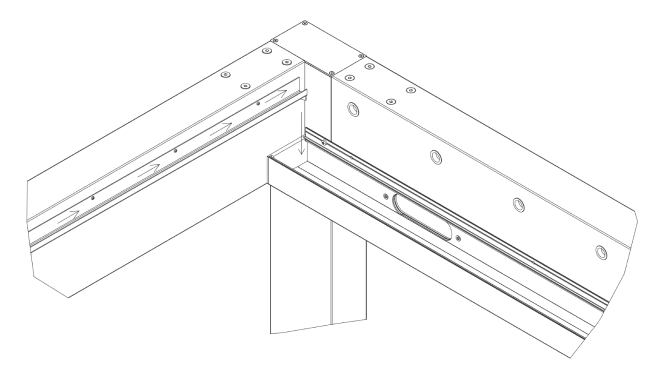
Flow from the front blade to the front matting blade (bent gutter) the gutter without slope.
The drain ends from the gutter to the common gutter.
In the case of derivation on the sides, the common gutter is below (transverse).
NOTE: The linked splint of two segments with the stud in the middle
Detail 4
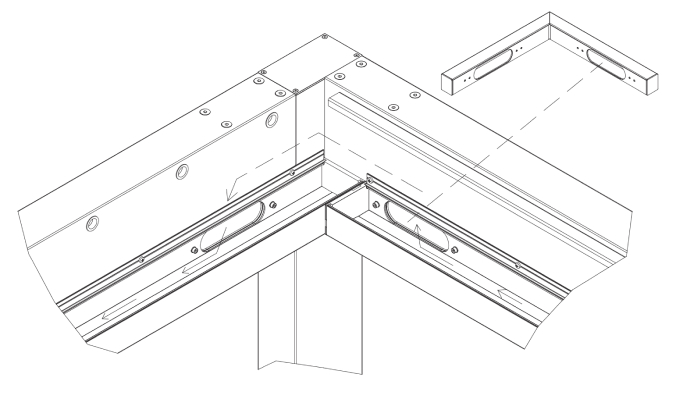
Cross gutter (at a cross slope, no hateful slope).
Internal cut 87 x 47 mm.
The gutter is connected the longitudinal bar with the side oval overflows
with the angular derivation - internal section mm.
Detail 5
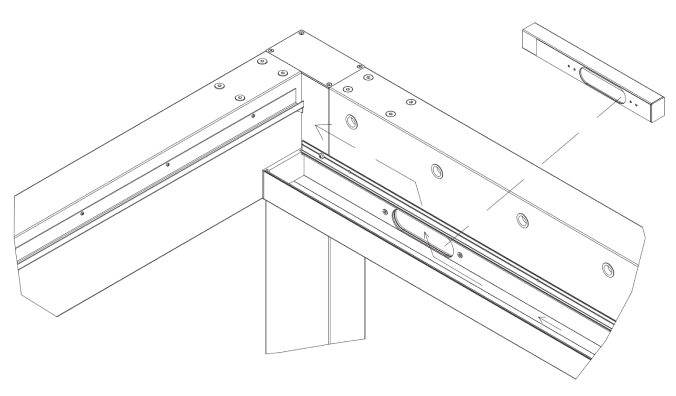
Kidney-shaped overflow hole 144 x 483
Straight branch profile (in bar) 34 x 44 mm
5. Cutting parts:
Simple cross section
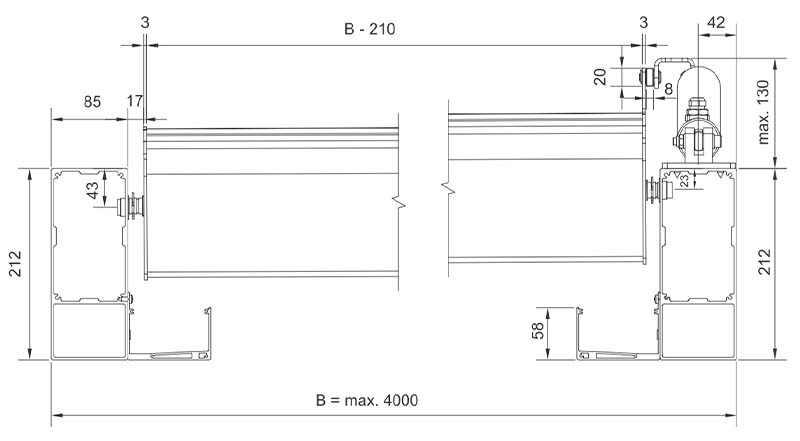
Cross section for pergola with engine cover
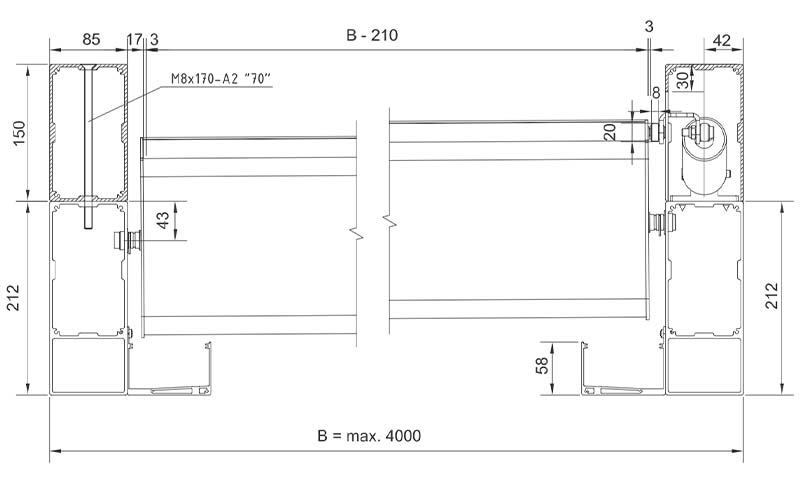
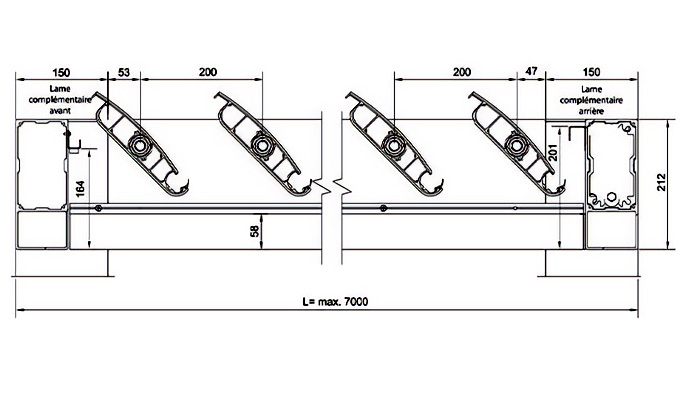
longitudinal section
Feet without derivation

Feet with bypass

Feet in EN AW-5754 aluminum sheet, 8 mm thick, powder coated.
Section of the rear complementary blade

Material: sheet metal EN AW6060 T66
Mass 0.25 kg/m
Cut of the front complementary blade

Material: sheet metal EN AW6060 T66
Mass 0.25 kg/m
Gutter Cut
(91.6x75)
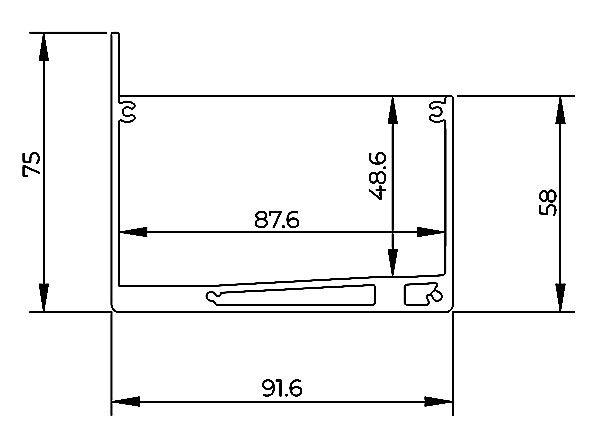
Material: EN AW6060 T66
Mass 2.08 kg/m
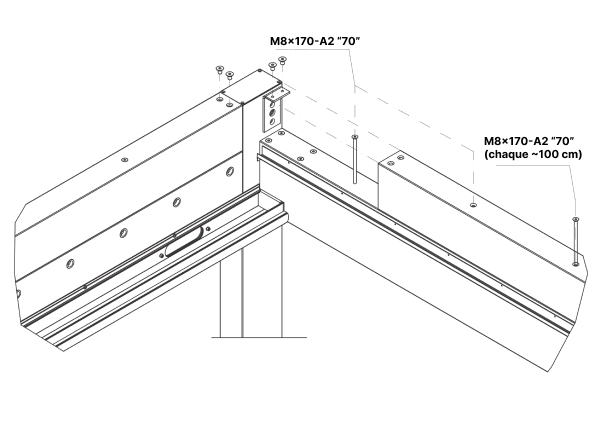
Masking bar attachment detail
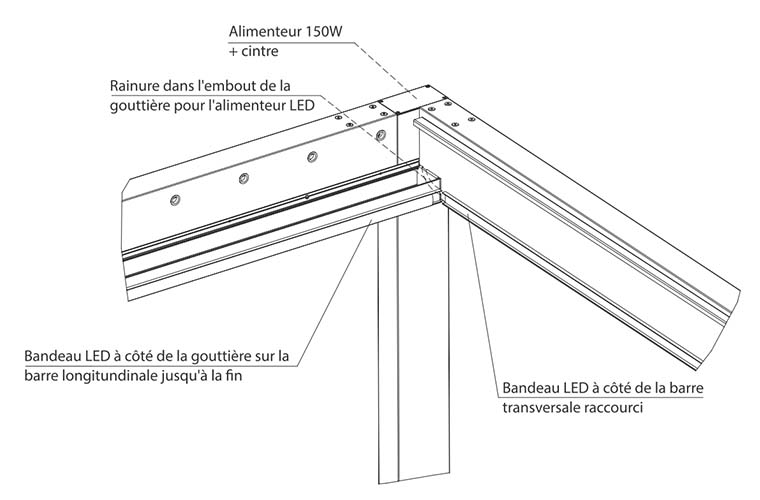
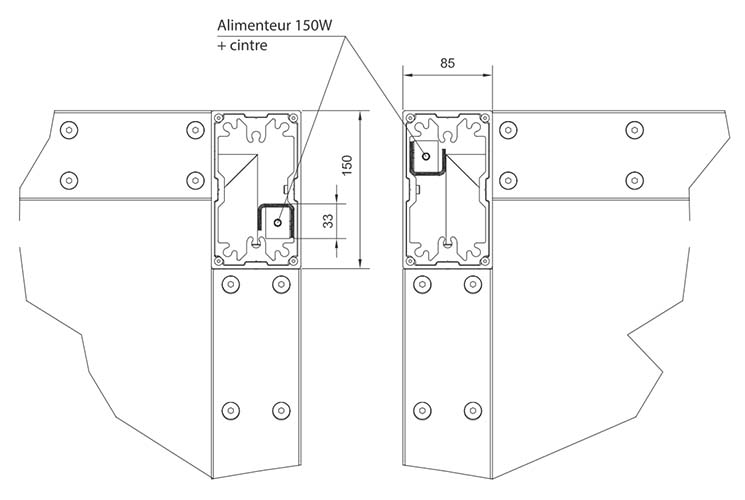
6. Where is the LED lighting located?
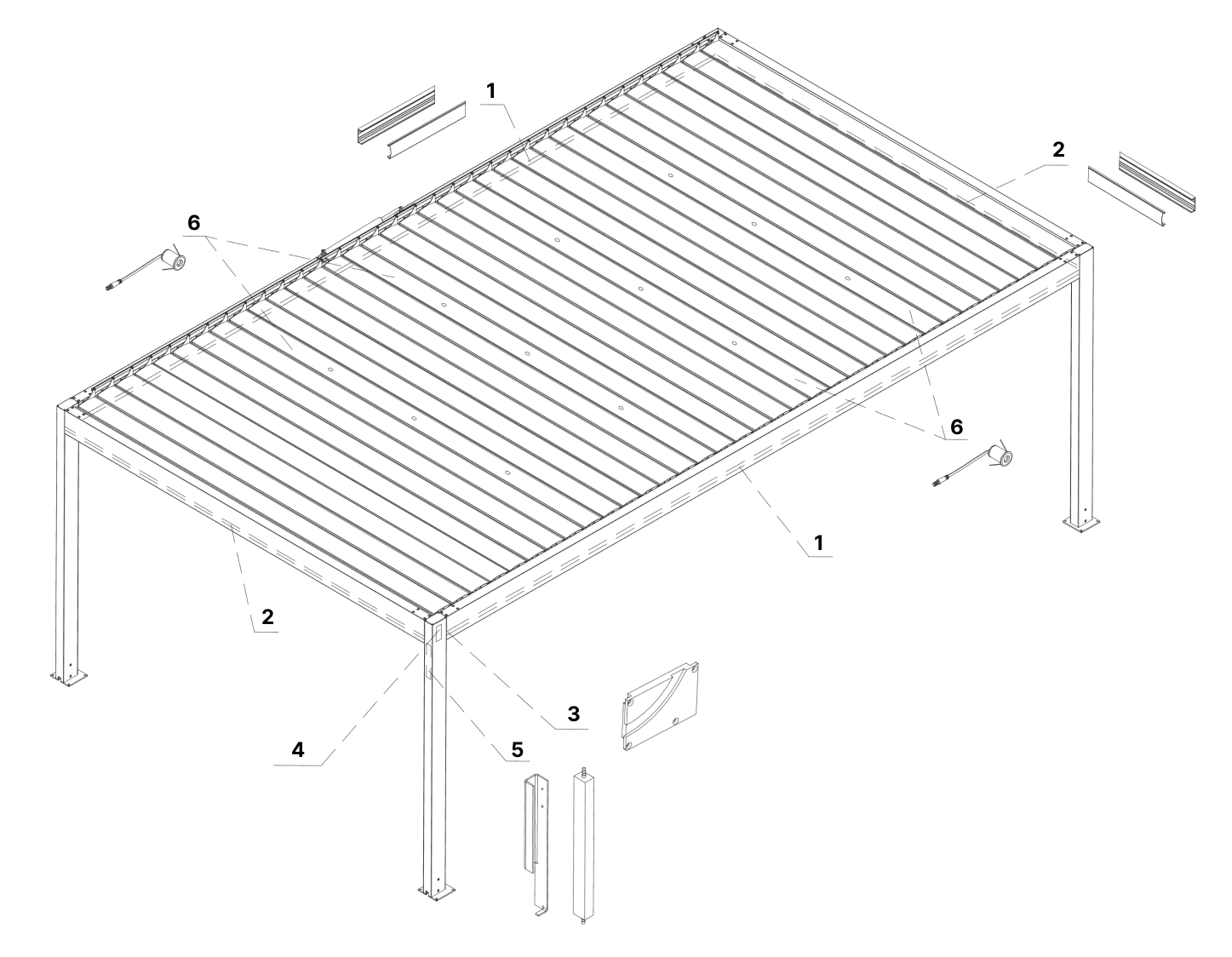
Meaning :
1 - LED strip with a plinth next to the gutter
2 - LED strip with a plinth next to the bar
3 - End cap with milled groove
4 - Lighting controller
5 - 24 V power supply with hanger
NOTE:
If the total LED circuit > 12 m the power supply must be split into 2 sections.
(at cable exit point)
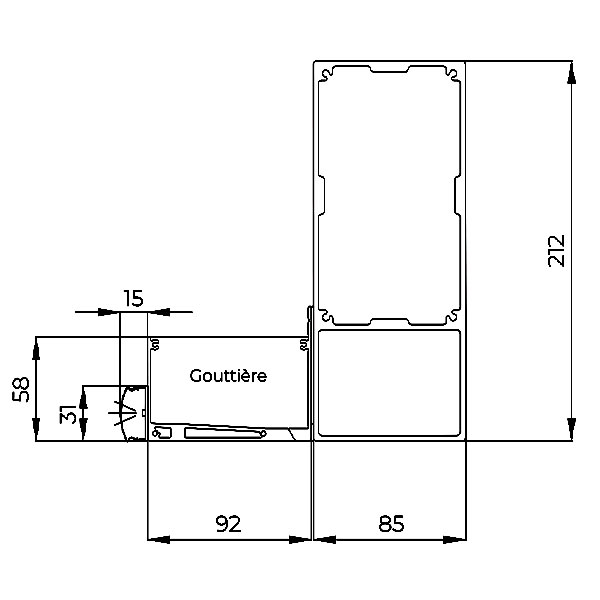
Longitudinal bar
Cross-bar
has. Detail of the LED strip power supply
b. Location of the LED feeder
Options Details
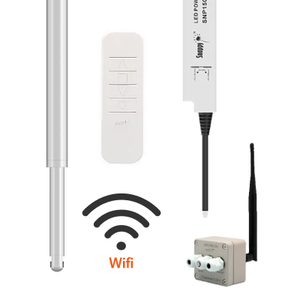
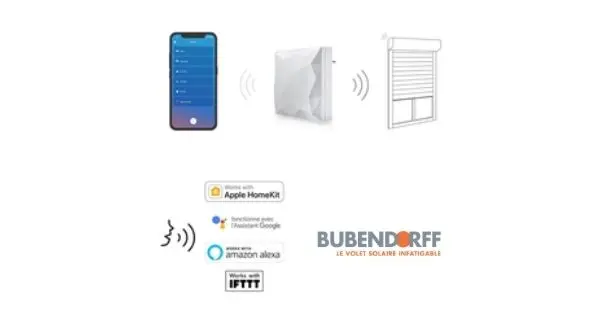
The Blebox antenna allows you to operate your pergola using your phone.
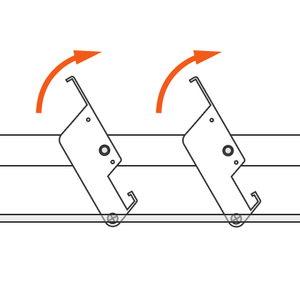
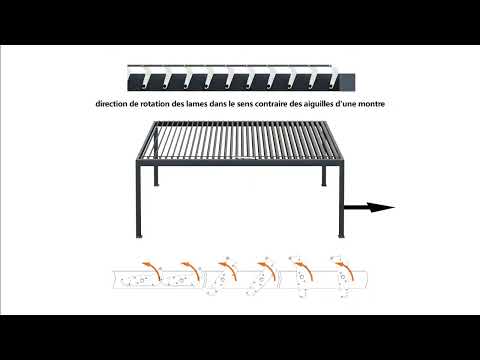
The blades will rotate clockwise when standing outside the pergola and looking at the left side.
So if the facade of your building is towards the back, your blades open from back to front.
With the 45° blades, the sun's rays will be blocked by the blades.
This orientation is ideal for pergolas located in regions south of Lyon, where solar gain in winter is not necessarily necessary to heat your main room.

The blades will rotate counterclockwise when standing outside the pergola and looking at the left side.
So if the facade of your building is located at the back, your blades open from front to back.
With the 45° blades, the sun's rays will be able to pass through in mid-season and thus enter your home if your pergola faces south, and if your blades are parallel to the facade.
This orientation is ideal for pergolas located in regions north of Lyon, where solar gain in winter is necessary/desired to heat your main room.
- Classe 3 - 45 km / h
- Freestanding
To enhance your outdoor space, a pergola is the perfect solution. But what are the different points you need to know?
Declaration or permit? Cerfa? Find out the regulations for your future outdoor space
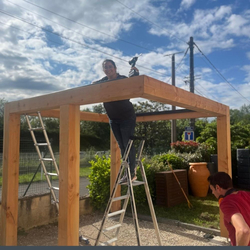
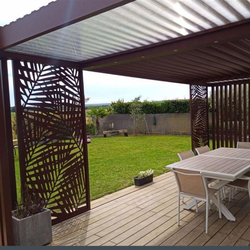
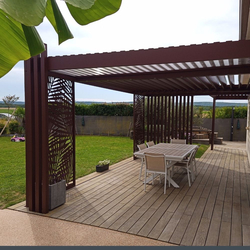
How to make a unique aluminum pergola? How to integrate a blade kit into an aluminum structure?
Discover the interview with Cyril Cotteret, metal craftsman at CTRT Soudure, and his custom pergola project.
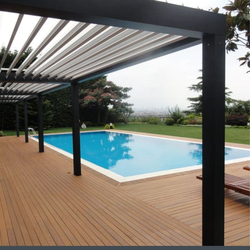
Practical guide: Choosing the right louver direction and opening for your bioclimatic pergola to fully enjoy its benefits
No reviews found
You have a question ?
Orientation des lames de pergola